
Herringbone or chevron flooring?
Herringbone blocks have straight ends and sit in a staggered zigzag. Chevron blocks are cut at an angle so they meet in a true point and the zigzag runs in clean lines. Both are laid from the centre of the room, and both need extra material for the cuts.
How the two patterns differ, how to tell them apart and which suits your room.
Free and no obligation. Your request goes to one fitter in your county, not a list.
- straightherringbone block ends
- angledchevron block ends
- a true pointwhere chevron blocks meet
- 10–20%extra for herringbone cuts
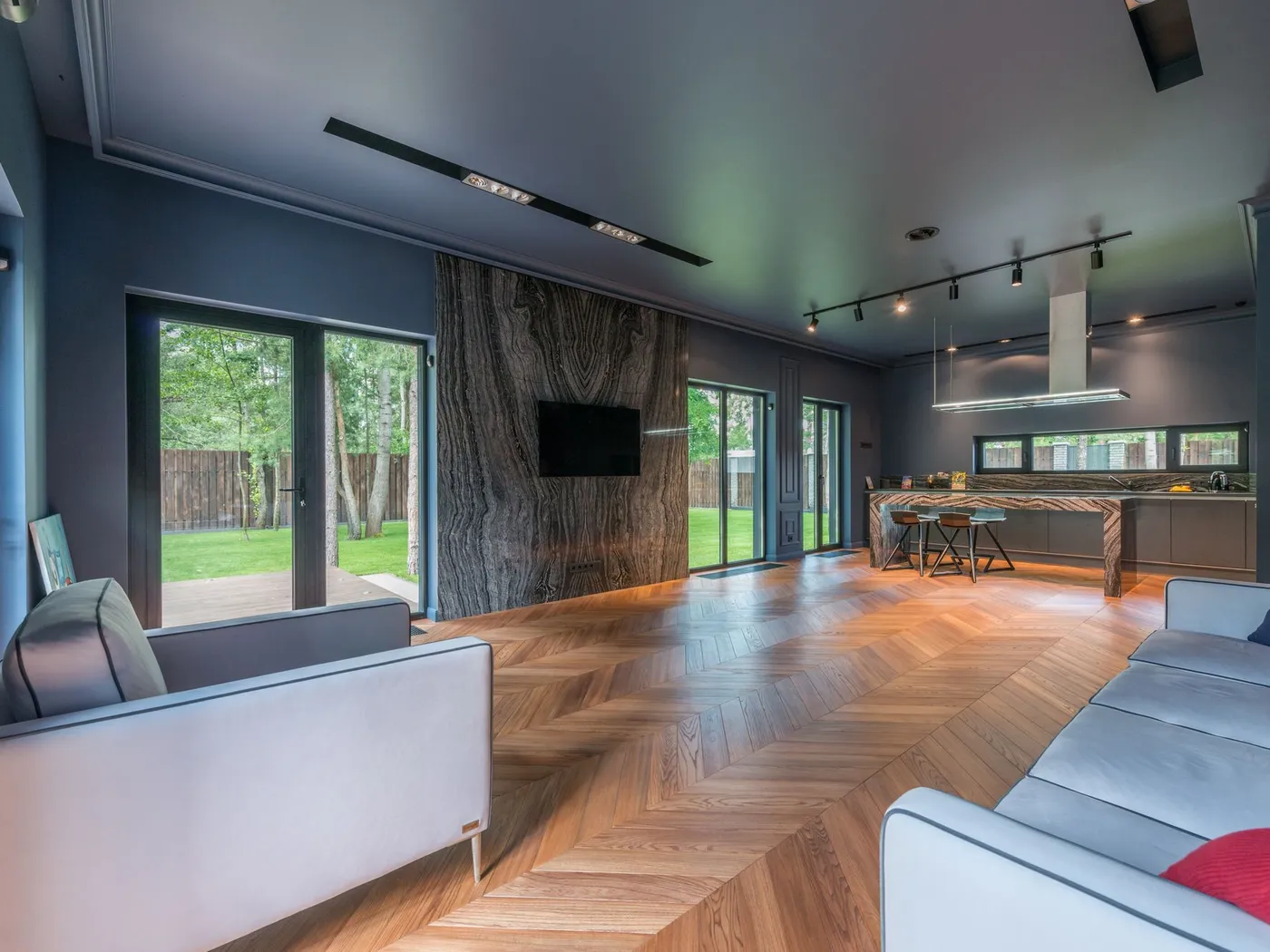
The difference, side by side
Herringbone
- Block ends
- Cut straight
- How blocks meet
- End to side, staggered
- The line it makes
- A zigzag with a stagger
- Set out from
- The centre of the room
Chevron
- Block ends
- Cut at an angle
- How blocks meet
- End to end, in a point
- The line it makes
- A clean, unbroken V
- Set out from
- The centre of the room
Price your herringbone floor
Three taps and the price shows as you go. Your name and number come last, and only if you want a fitter to price it.
Engineered wood herringbone, 20 to 40 m², supplied and fitted: €1,900 to €5,200.
How the price is worked out
The figure is what Irish sellers and fitters charge a square metre, times the area you pick. Engineered wood is the supplied-and-fitted range. Laminate and vinyl add fitting at plank rates, so herringbone adds to them. Tile is the tile only. Where nobody publishes a figure, it reads priced on a visit. Use it to plan with. It isn't a quote: a fitter prices yours after seeing the floor.
How to tell them apart
Look at where two blocks meet along the zigzag. If the end of one block butts into the side of the next and the line steps along, it is herringbone. If both ends are cut at an angle and they join in a single sharp point, it is chevron.
Photos of chevron are often labelled herringbone, and the reverse. Ask for the block drawing before you order.
Which one for your room
Herringbone is the traditional choice and the one sold in every material this site covers: engineered wood, solid oak, laminate, vinyl and tile. Chevron is sold mainly in wood. If you want the more formal, uninterrupted line, ask the fitter about chevron. The fitter prices both the same way, on a visit.
Herringbone prices: the cost page.
Other floors to look at
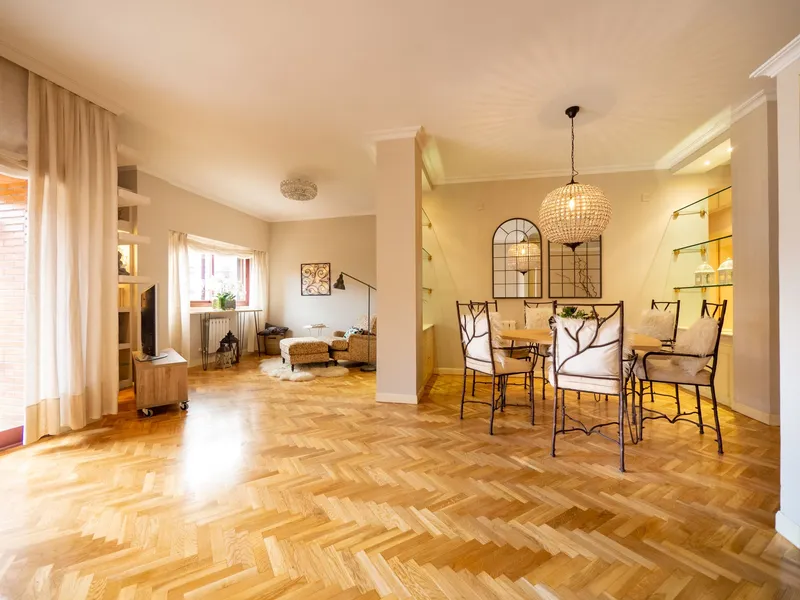 Engineered woodA real oak top layer on a stable core. Supplied and fitted, €95 to €130 a m².
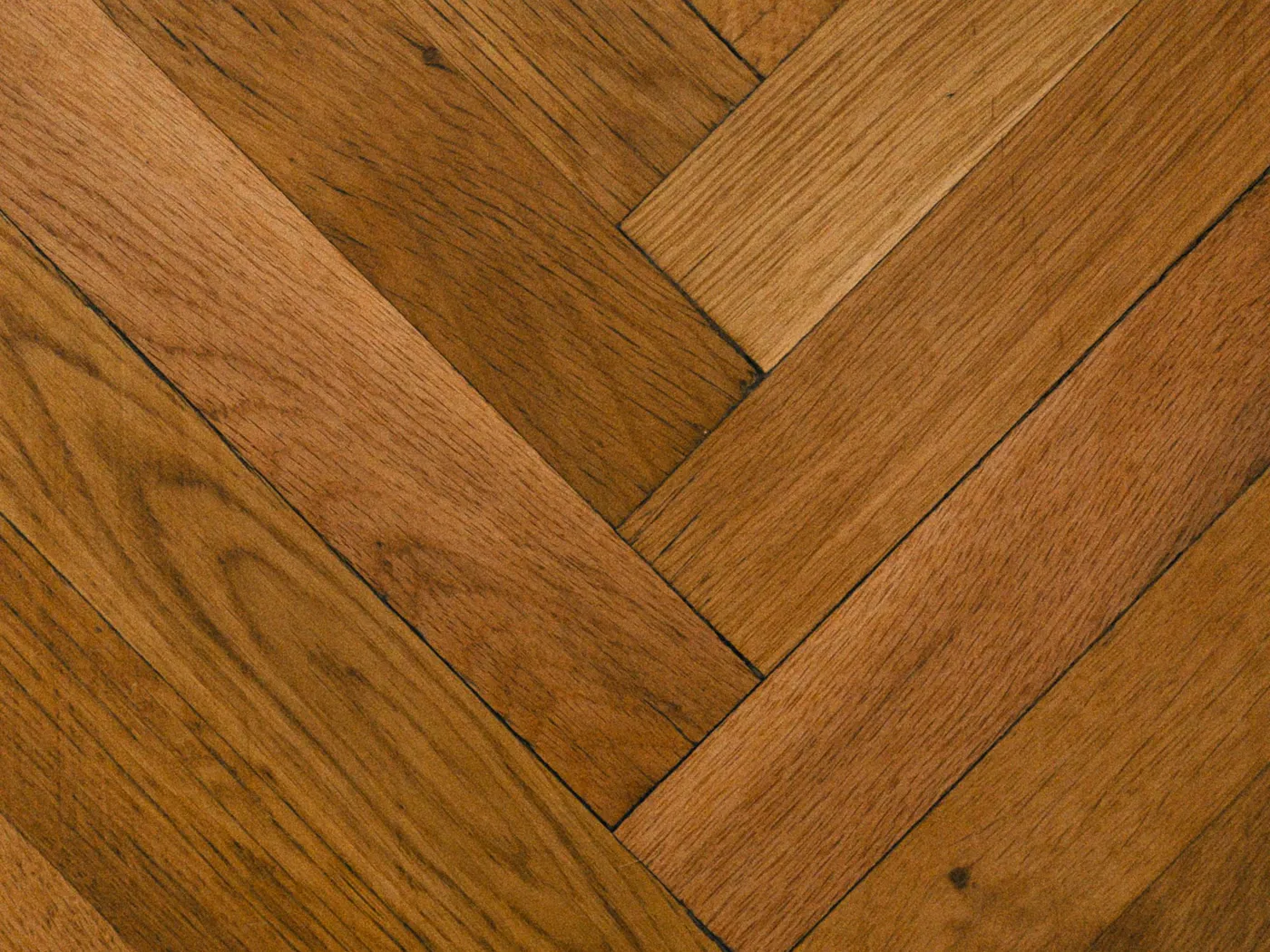 Oak herringboneSolid oak blocks, €39 to €168 a m² unfinished before fitting.
 ParquetBlocks laid in a pattern, sanded and finished on site. Herringbone is the one people ask for.
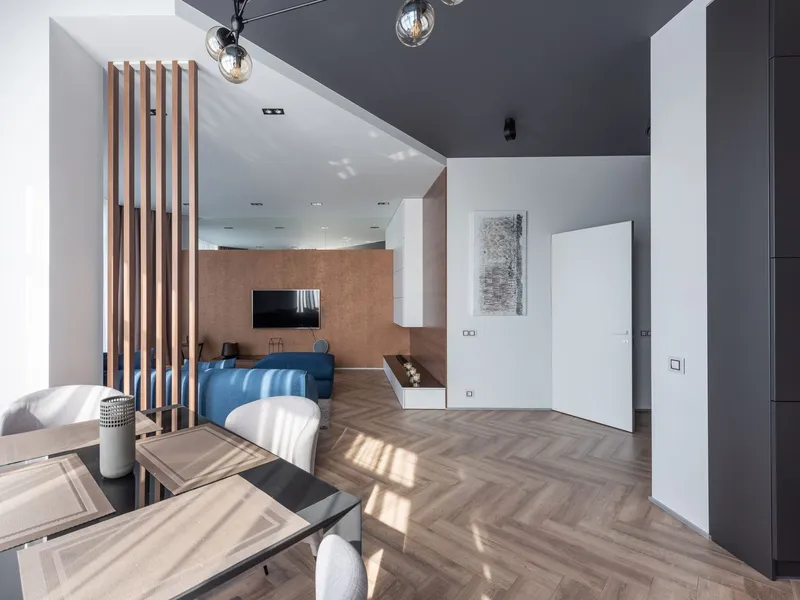 LaminateWood-look boards that click together. €27 to €107 a m² to buy.
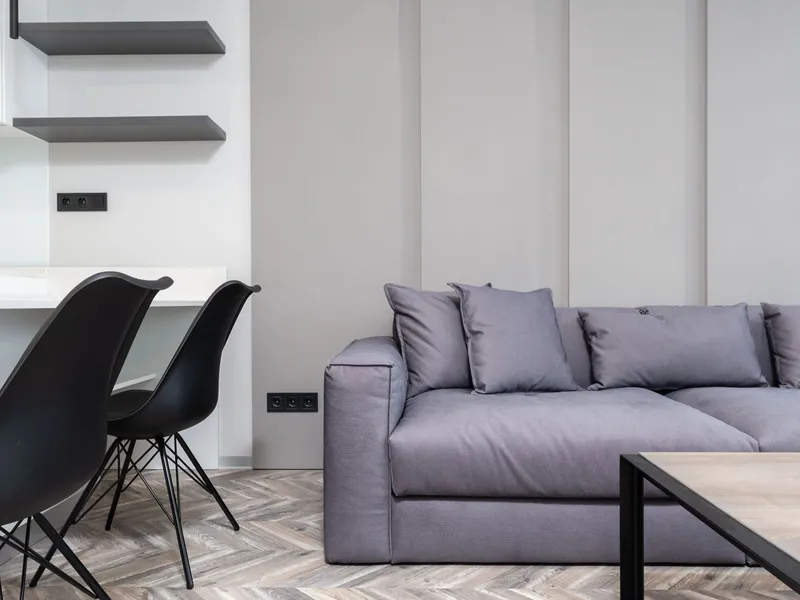 Vinyl and LVTClick vinyl in a herringbone. €48 to €67 a m² to buy.
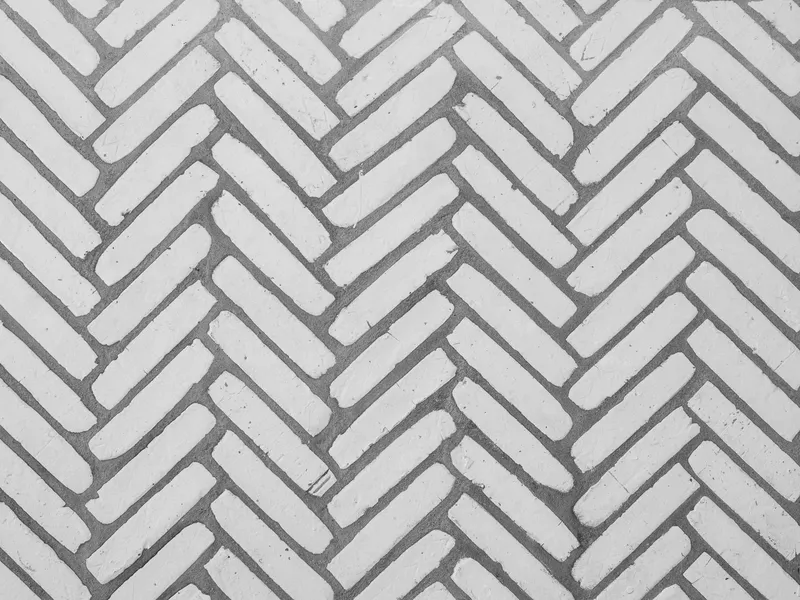 TilesPorcelain laid in a zigzag. €18 to €50 a m² to buy.
Questions before you buy
What is the difference between herringbone and chevron?
Herringbone blocks have straight ends and sit in a staggered zigzag. Chevron blocks are cut at an angle so they meet in a true point and the zigzag runs in clean lines. Both are laid from the centre of the room, and both need extra material for the cuts.
Which is more expensive, herringbone or chevron?
Both are priced by a fitter on a visit, as the angled cuts and the waste differ by the block and the room.
Can I get chevron in laminate or vinyl?
Herringbone is the common layout in laminate, vinyl and tile. Ask the seller for chevron.
Do both need the same subfloor?
A herringbone floor needs a dry, flat subfloor. Concrete should read under 6% moisture content and a timber subfloor under 16%. A dip of more than 2 mm in a metre is levelled before anything goes down.
Everything on this site
Floors by material
Costs and fitting
The pattern and where it goes
See the price before anyone rings
Pick the floor, how big it is and where you live. When you want a firm price, it goes to a single floor fitter in your county.