
Herringbone floor with a border
A border is a frame of straight boards around the room, with the herringbone stopping short of the walls. It is usually a single row, and a double or triple row adds emphasis. A border cuts down the awkward cutting at the walls and hides walls that are not straight.
What a border does, how wide to make it and how it is laid out.
Free and no obligation. Your request goes to one fitter in your county, not a list.
- 1 rowthe common border
- 2 or 3rows for more emphasis
- same thicknessas the herringbone, always
- €25 to €40 a m²the usual herringbone extra, before a border
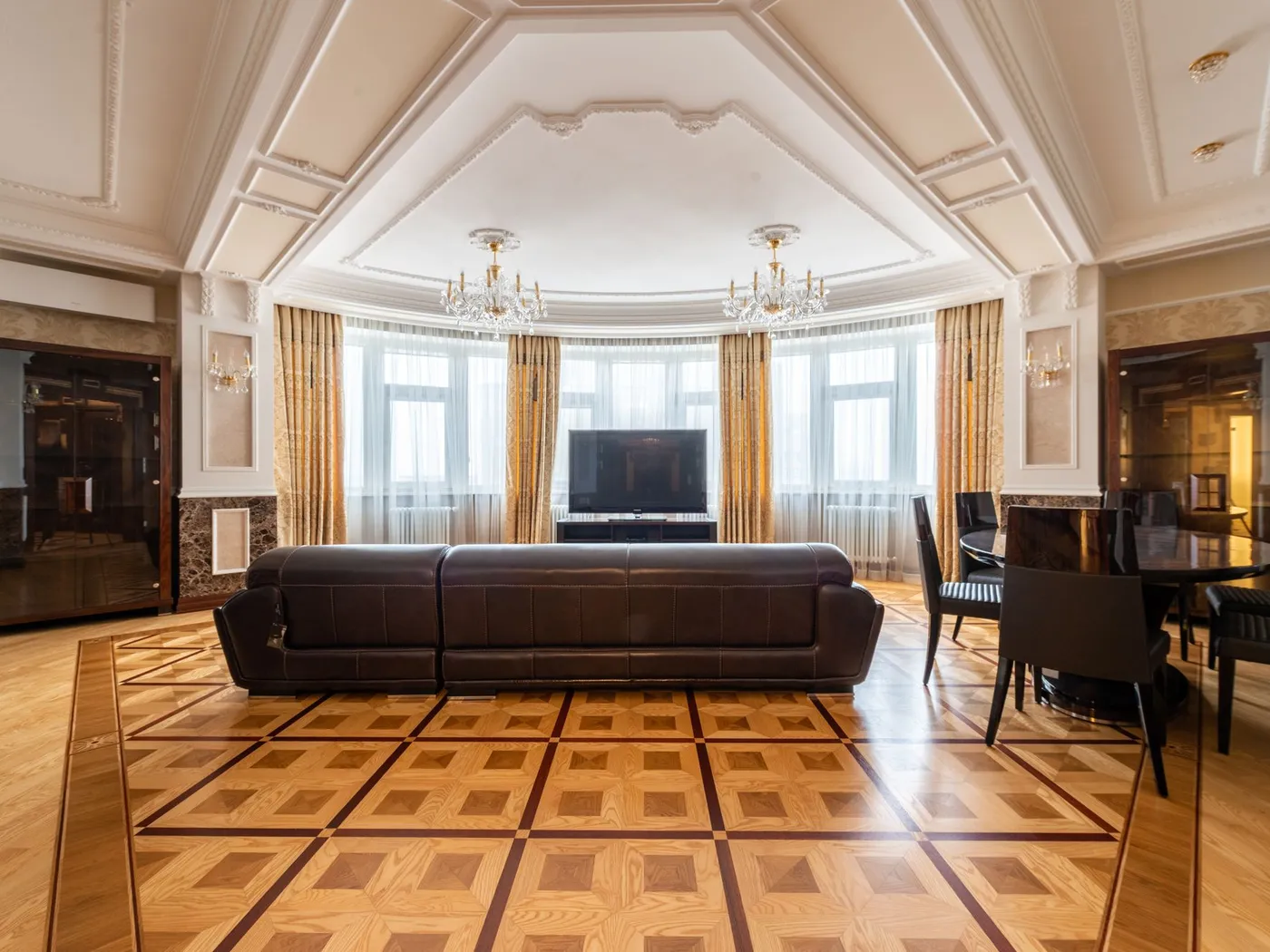
What a border does
- It frames the floor. The zigzag ends cleanly before it reaches the wall.
- It cuts the cutting. The straight runs at the edge are easier to cut neatly than angled pieces.
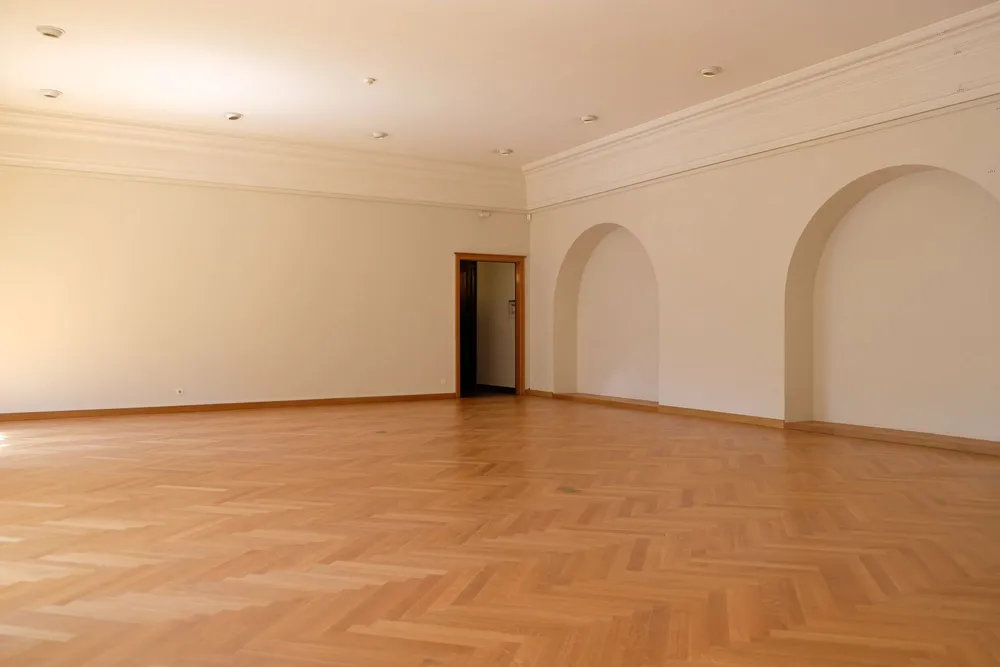
- It hides crooked walls. Walls are rarely perfectly straight, especially in older houses with alcoves. Without a border, they show as slivers at the edge of the herringbone.
- It hides the expansion gap. The gap is covered without a bead or awkward cuts.
Price your herringbone floor
Three taps and the price shows as you go. Your name and number come last, and only if you want a fitter to price it.
Engineered wood herringbone, 20 to 40 m², supplied and fitted: €1,900 to €5,200.
How the price is worked out
The figure is what Irish sellers and fitters charge a square metre, times the area you pick. Engineered wood is the supplied-and-fitted range. Laminate and vinyl add fitting at plank rates, so herringbone adds to them. Tile is the tile only. Where nobody publishes a figure, it reads priced on a visit. Use it to plan with. It isn't a quote: a fitter prices yours after seeing the floor.
Single, double or triple
A single row is the common choice. A double or triple row adds emphasis to the step from the wall to the main floor. The width should suit the room and the block size: too thin looks mean, and too thick overwhelms the pattern. A thin, darker feature strip can sit between the herringbone and the border.
Colour and material
The border can match the floor or contrast with it, for example a walnut border around a lighter oak herringbone. Keep the thickness the same so there is no step. A border placed under the skirting removes the need for a quarter round or extra trim.
Planning the layout
The fitter marks where the herringbone ends and the border begins, then cuts the herringbone blocks along that line. The pattern is set out so the borders line up with doorways, fireplaces and the sightlines through the house. Misaligned borders make a floor look disjointed from room to room.
A border adds cuts, so allow for it in the 10 to 20% extra. The fitter prices the layout on a visit.
Other floors to look at
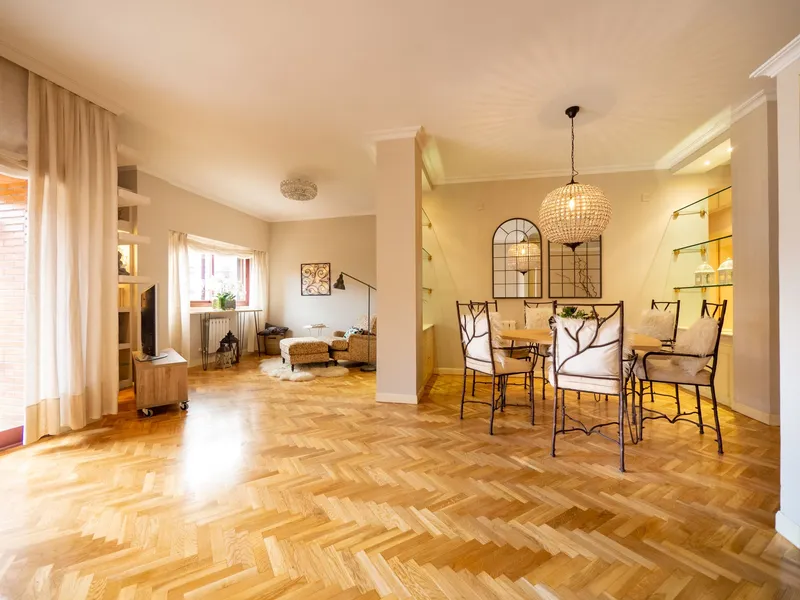 Engineered woodA real oak top layer on a stable core. Supplied and fitted, €95 to €130 a m².
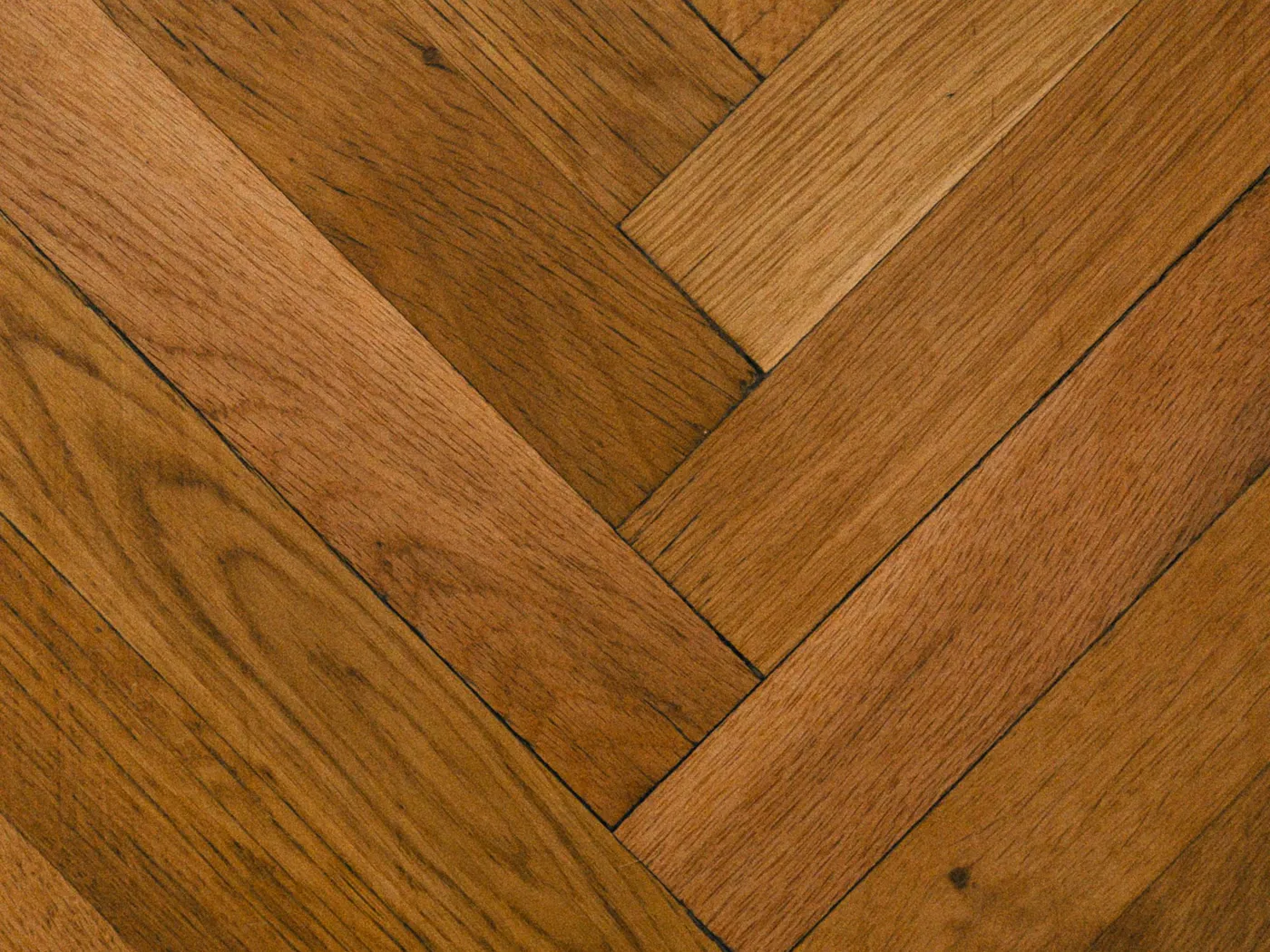 Oak herringboneSolid oak blocks, €39 to €168 a m² unfinished before fitting.
 ParquetBlocks laid in a pattern, sanded and finished on site. Herringbone is the one people ask for.
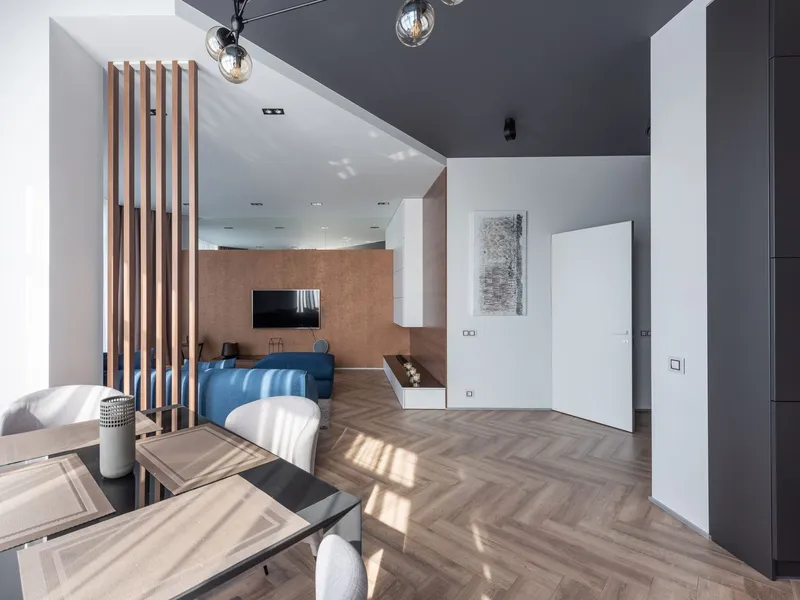 LaminateWood-look boards that click together. €27 to €107 a m² to buy.
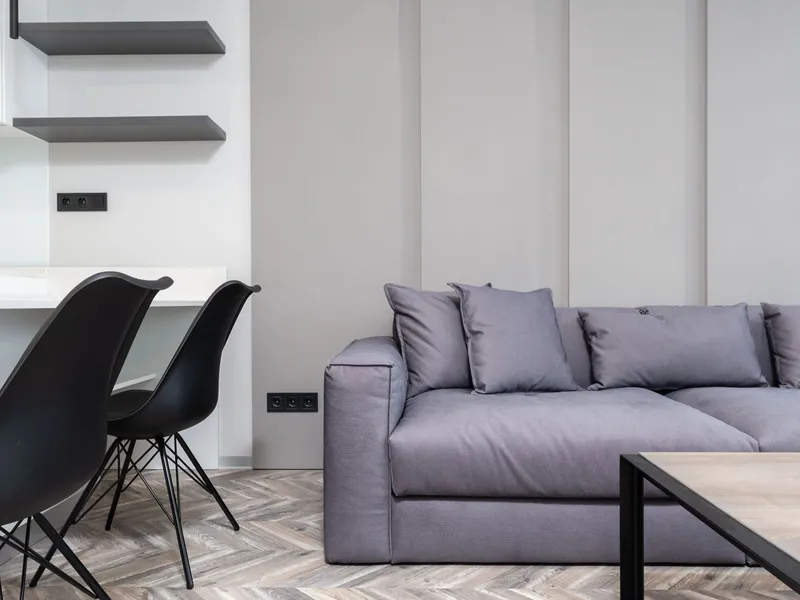 Vinyl and LVTClick vinyl in a herringbone. €48 to €67 a m² to buy.
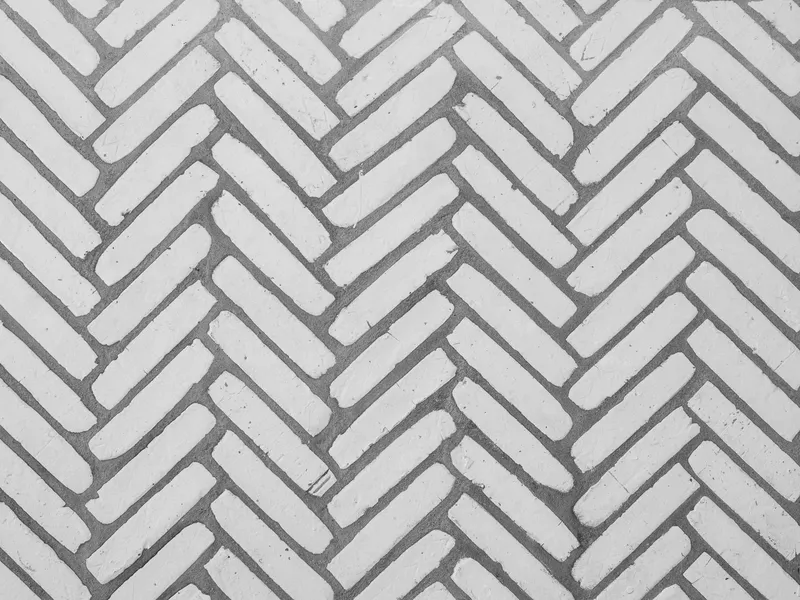 TilesPorcelain laid in a zigzag. €18 to €50 a m² to buy.
Questions before you buy
What is a herringbone floor with a border?
A border is a frame of straight boards around the room, with the herringbone stopping short of the walls. It is usually a single row, and a double or triple row adds emphasis. A border cuts down the awkward cutting at the walls and hides walls that are not straight.
How wide should the border be?
It should suit the room and the block size. Too thin looks mean, and too thick overwhelms the pattern.
Can the border be a different wood?
Yes. A contrasting colour or species is common, as long as the thickness matches.
Does a border cost more?
It adds cuts and layout work, so the fitter prices it on a visit.
Do I need a border in a hall?
Borders help at doorways and thresholds, particularly in halls and corridors.
Everything on this site
Floors by material
Costs and fitting
The pattern and where it goes
See the price before anyone rings
Pick the floor, how big it is and where you live. When you want a firm price, it goes to a single floor fitter in your county.