
Fitting herringbone flooring
Fitting herringbone costs €25 to €40 a m² more than fitting straight planks. A 30 m² room takes two to four days against one to two. The fitter tests the subfloor, sets out from the centre of the room, glues the blocks down in sections, then sands and oils. Order 10 to 20% more than the floor area for herringbone, against 5 to 10% for straight planks. Every piece at the walls is cut at an angle, and the off-cuts are triangles.
What the fitter does, in order, what it costs over plank and how long a room takes.
Free and no obligation. Your request goes to one fitter in your county, not a list.
- €25–€40 a m²extra over plank fitting
- 2–4 daysto lay 30 m²
- 10–20%extra material for cuts
- 10–15 mmgap at the walls

Before the first block
- Moisture. Test the subfloor. Concrete should read under 6% moisture content, or under 2% on a carbide test. A timber subfloor should read under 16%.
- Flatness. No dip of more than 2 mm in 1 m. Dips and high spots are levelled with compound before anything goes down.
- Old ground-floor slabs. They can hold moisture. The test says whether a damp-proof membrane is needed.
- Settling. Engineered boards stay in their packs in the room for 48 to 72 hours. Solid wood needs at least 7 days.
Setting out
Herringbone is not laid from one wall. The fitter snaps chalk lines through the centre of the room and builds the pattern outward from the first block, in a diamond. Blocks sit at 45 or 90 degrees to the room's main axis.
A dry run goes down from the centre toward each wall before any glue is opened. It shows where the pattern lands at the walls and at doorways, so you do not end up with a narrow off-cut in the one place everybody looks.
Price your herringbone floor
Three taps and the price shows as you go. Your name and number come last, and only if you want a fitter to price it.
Engineered wood herringbone, 20 to 40 m², supplied and fitted: €1,900 to €5,200.
How the price is worked out
The figure is what Irish sellers and fitters charge a square metre, times the area you pick. Engineered wood is the supplied-and-fitted range. Laminate and vinyl add fitting at plank rates, so herringbone adds to them. Tile is the tile only. Where nobody publishes a figure, it reads priced on a visit. Use it to plan with. It isn't a quote: a fitter prices yours after seeing the floor.
Laying
Solid blocks are glued down with a flexible flooring adhesive suited to the subfloor and the block. It is trowelled in sections that can be laid before it skins over, and each block is tapped home with a rubber mallet.
Engineered herringbone can be floated, glued or nailed. Glue suits underfloor heating and gives a quieter floor. Floating suits click-lock boards.
Leave a 10 to 15 mm gap at every wall, door frame and pipe. Skirting or beading covers it.
Sanding and finishing
A glued parquet floor is sanded once the adhesive has cured, about a day after the last block. The sanding goes through finer and finer grits and ends with a fine orbital sand. Two coats of hardwax oil follow: the first soaks in, the second builds the surface. Normal use starts a day or two after the last coat.
A fitter lays herringbone for €25 to €40 a m² more than straight planks. The oil is in the supplied-and-fitted figures for oak.
How long it takes and when to book
A 30 m² room takes two to four days to lay in herringbone, against one to two days for straight planks. Fitters are usually booked two to six weeks ahead.
In a kitchen, flooring is usually the last trade in: after the units and before the skirting and the final decoration. Book the fitter to match.
What a good quote includes
Ten things to see in writing before you say yes.
- The floor. Species and grade, thickness, wear layer and block size, written out.
- Supply, fit or both. Which of the three the price covers.
- The pattern. Herringbone named, not plank, with any border or feature strip.
- The extra boards. How many m² are ordered over the floor area for cuts.
- The subfloor. A moisture reading, any levelling, and whether they are in the price.
- Glue or float. The adhesive or underlay, and why that one.
- The finish. Oiled or lacquered, how many coats, and whether it is included.
- Skirting and thresholds. Refitted or new, and the doors trimmed to clear the floor.
- Uplift and disposal. Taking up the old floor, moving furniture and taking the waste away.
- The dates. When fitting starts and how many days it takes.
Other floors to look at
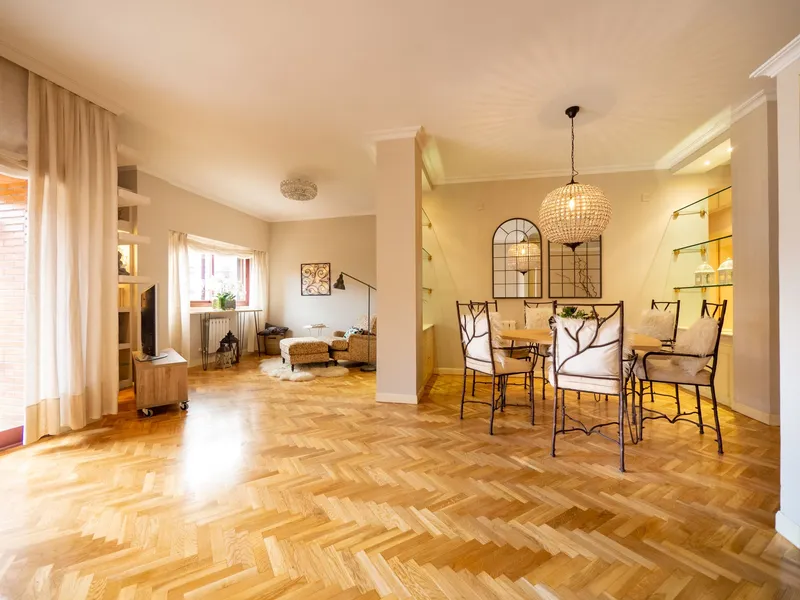 Engineered woodA real oak top layer on a stable core. Supplied and fitted, €95 to €130 a m².
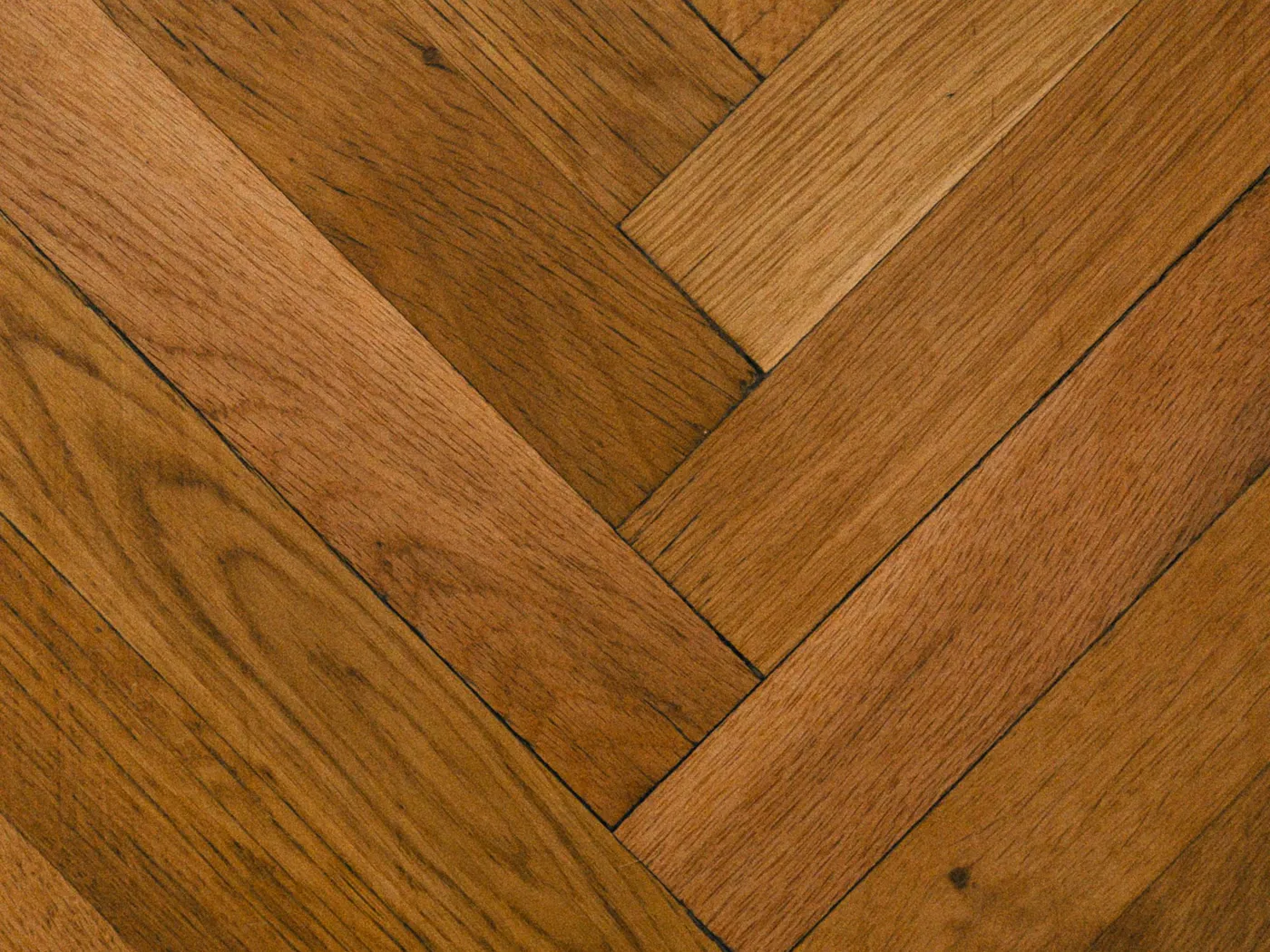 Oak herringboneSolid oak blocks, €39 to €168 a m² unfinished before fitting.ParquetBlocks laid in a pattern, sanded and finished on site. Herringbone is the one people ask for.
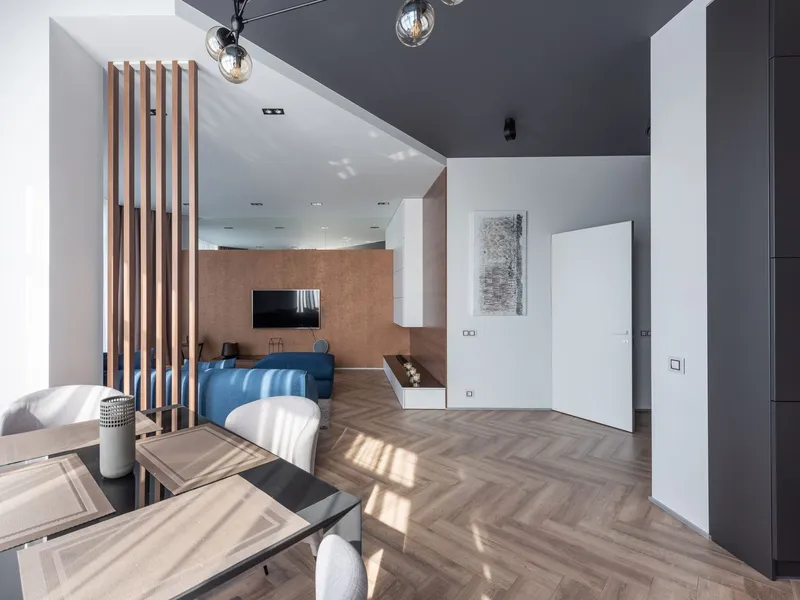 LaminateWood-look boards that click together. €27 to €107 a m² to buy.
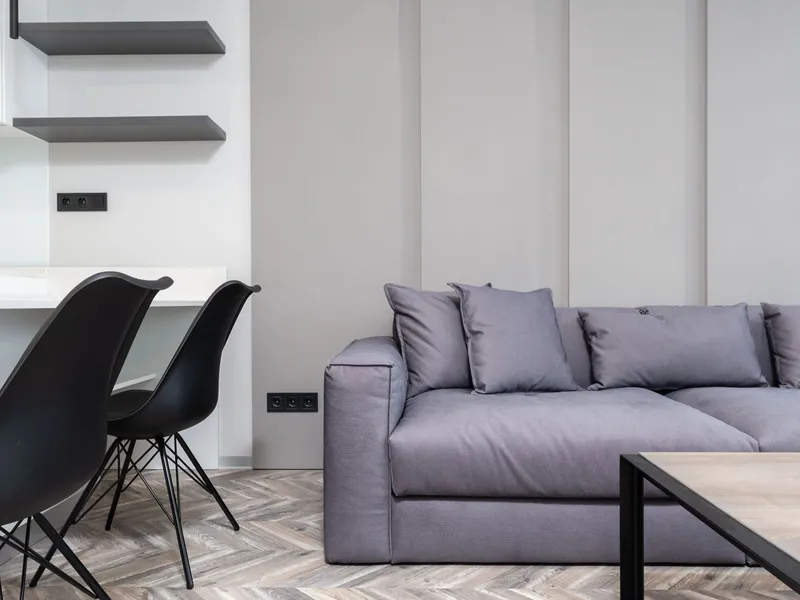 Vinyl and LVTClick vinyl in a herringbone. €48 to €67 a m² to buy.
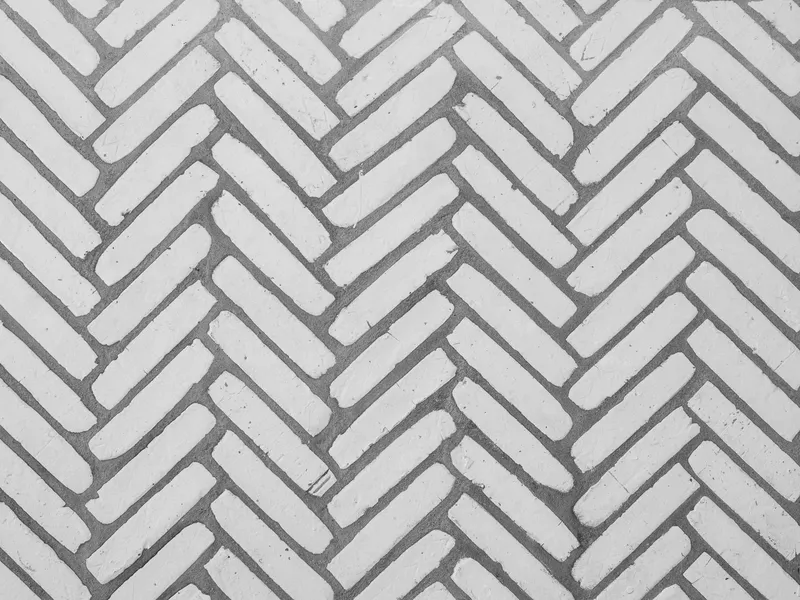 TilesPorcelain laid in a zigzag. €18 to €50 a m² to buy.
Questions before you buy
How much does it cost to fit herringbone flooring?
A fitter lays herringbone for €25 to €40 a m² more than straight planks. In engineered oak that puts a supplied-and-fitted floor at €95 to €130 a m², with the oil finish in the price. In solid oak it is €110 to €160 a m². Dublin runs 10 to 15% higher.
How long does it take to fit herringbone?
A 30 m² room takes two to four days to lay in herringbone, against one to two days for straight planks. Fitters are usually booked two to six weeks ahead.
Is herringbone glued or floated?
Solid blocks are glued. Engineered herringbone can be floated, glued or nailed, and glue suits underfloor heating.
Where does the fitter start?
At the centre of the room, from chalk lines, working outward to the walls.
When can I walk on it?
A floated floor is usable straight away. A glued, oiled floor needs a day or two after the last coat before furniture goes back.
What does the subfloor need?
A herringbone floor needs a dry, flat subfloor. Concrete should read under 6% moisture content and a timber subfloor under 16%. A dip of more than 2 mm in a metre is levelled before anything goes down.
Everything on this site
Floors by material
Costs and fitting
The pattern and where it goes
See the price before anyone rings
Pick the floor, how big it is and where you live. When you want a firm price, it goes to a single floor fitter in your county.